
Anodized Aluminum
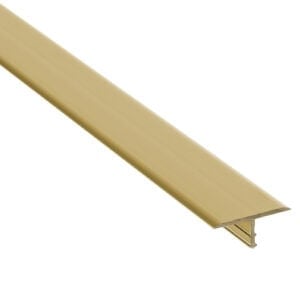
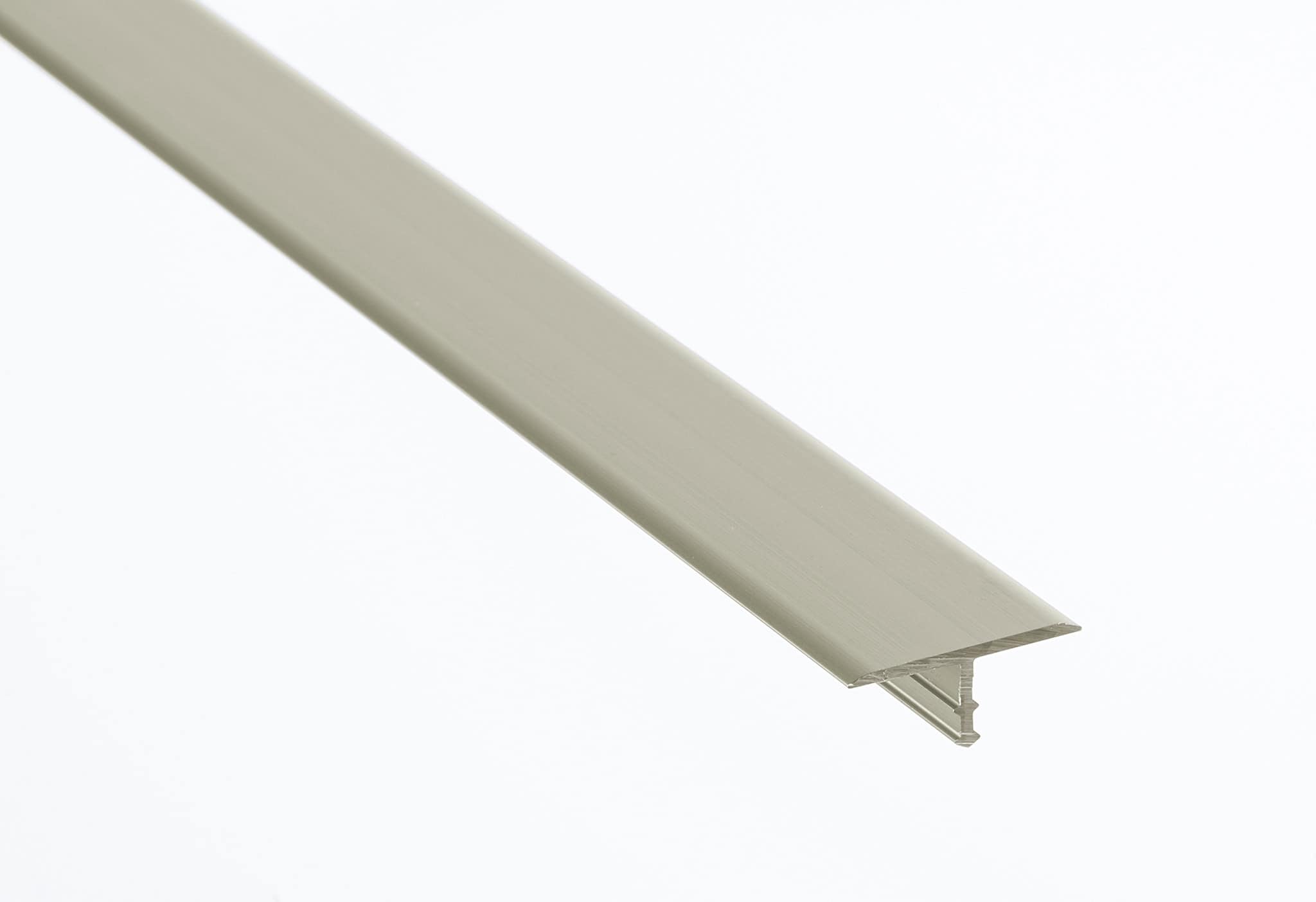
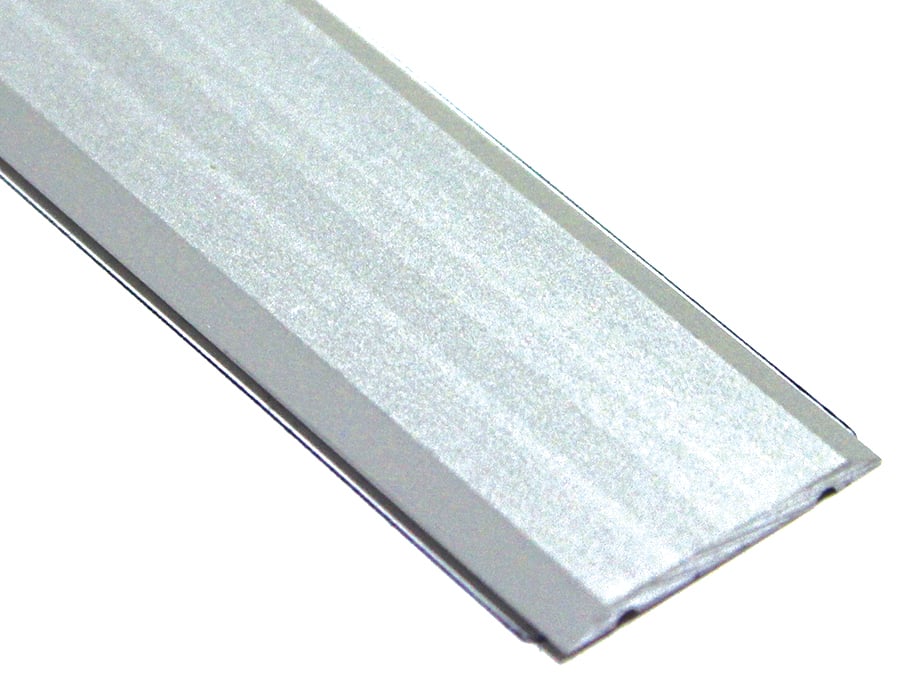
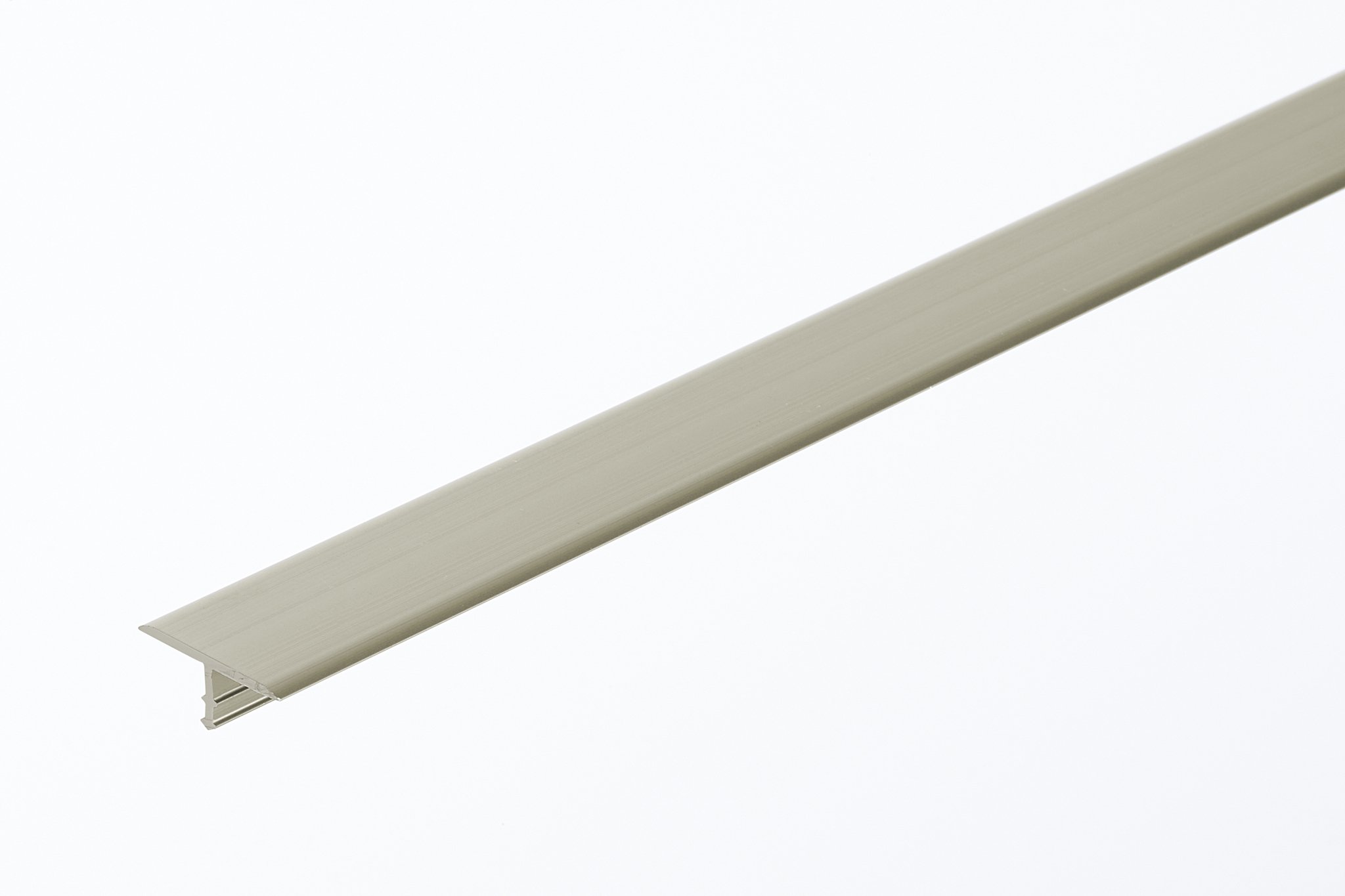
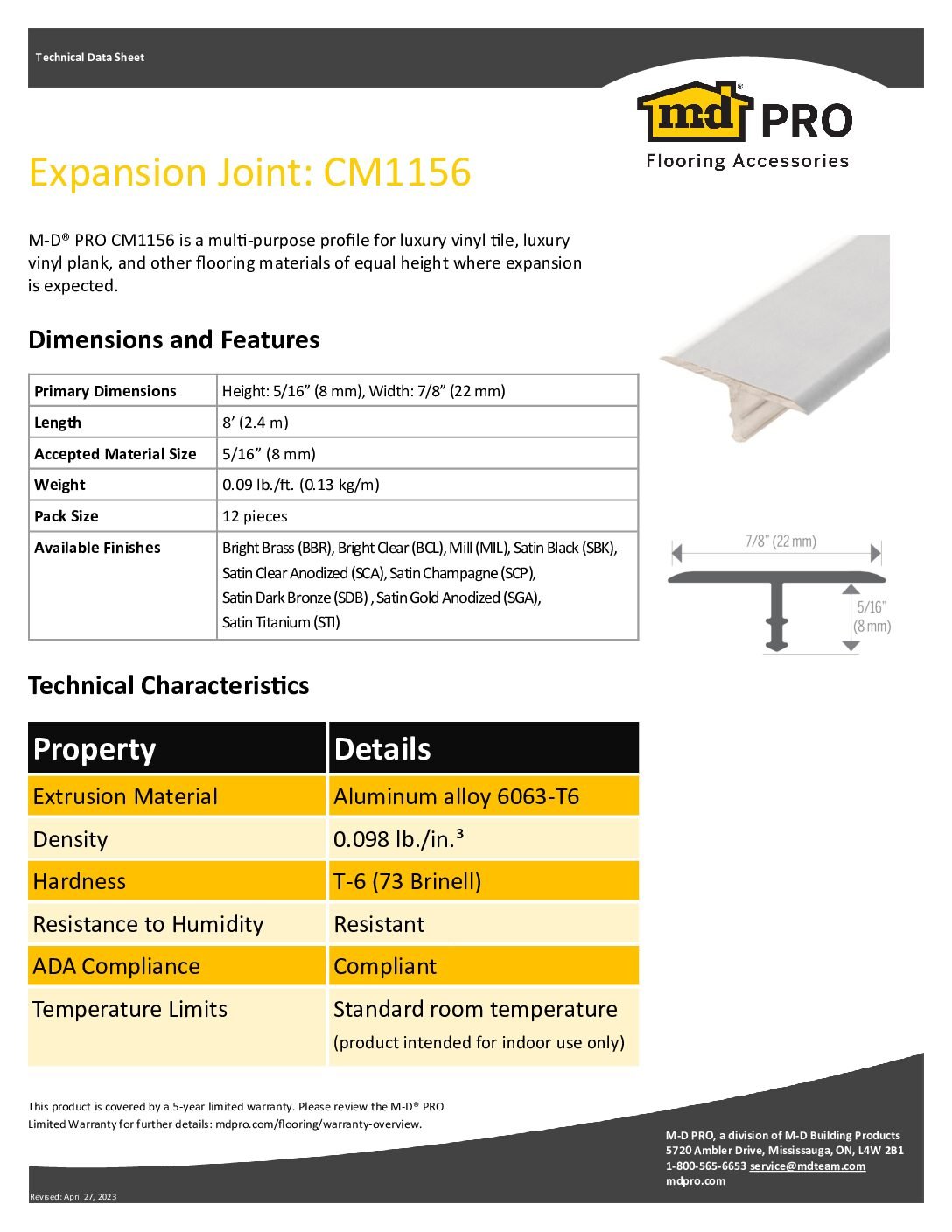
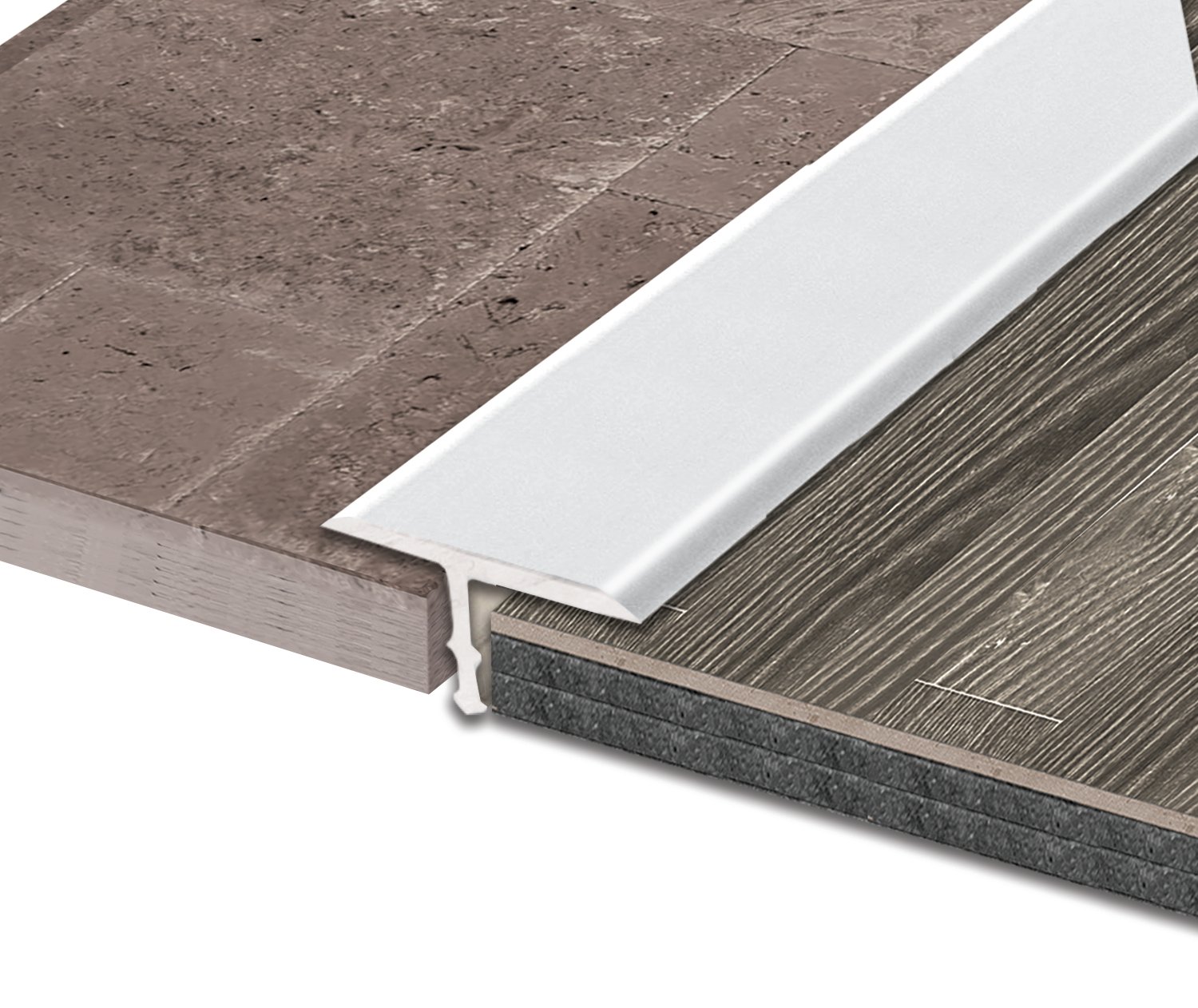
LVT/LVP T-Molding – Satin Clear Anodized (SCA) – 5/16 in. (8 mm) x 8 ft. (2.4 m)
Article #2082089962082
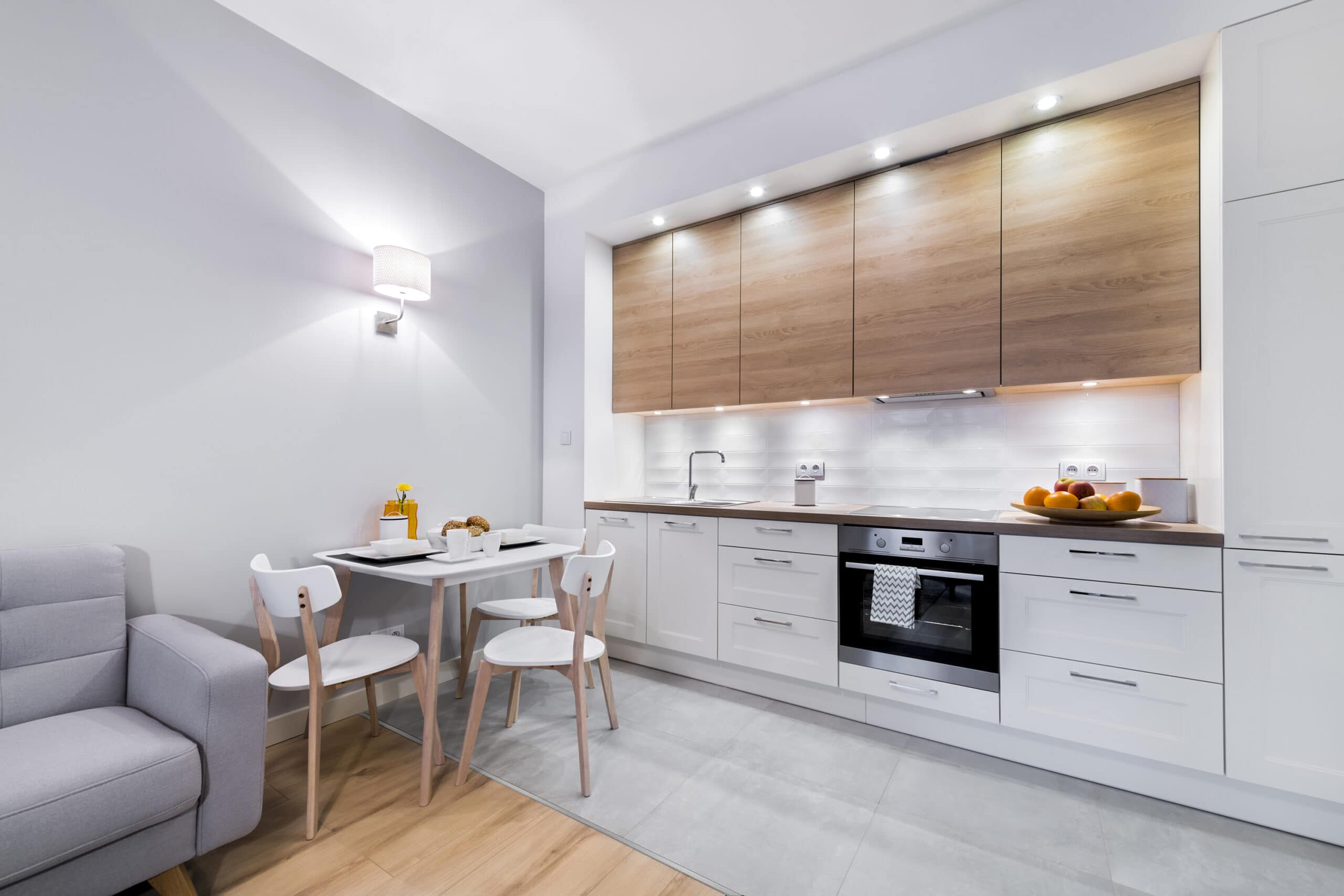
T-Molding for use between ceramic, hardwood, laminate and luxury vinyl tile/luxury vinyl plank (LVT/LVP) floors of equal heights and where expansion is expected to occur over time.

Ready to buy?
Find a store near you.

For Installation and Technical Specification Job Support: 1-888 MDPROVA / 1-888-637-7682

Additional Information

Product Features
  • Made of durable anodized aluminum
  • Attractive finish complements today’s most popular flooring styles
  • ADA compliant profile
  • ADA compliant profile

Why should tile trims be used? Tile trims are used to protect the edge of the tile from chipping and foot traffic. In flooring applications, they act as transitions from one flooring surface to another. Trims can be used as decorative edges and/or listello boarders. They provide protection, function and design.

Can aluminum tile trim be used outdoors? Aluminum is best suited for indoor use. Exposure to UV rays, salt and/or harsh chemicals may cause aluminum to oxidize and color may be affected.

Should I use the same size trim as the thickness of my tile? No. The trim should be sized such that the tile is flush with the top edge of the trim when installed with tile adhesive. You must take the tile adhesive thickness into consideration when choosing the size of trim to be used.

Does grout affect the finish on aluminum trims? Grout left on anodized aluminum in large amounts will etch and eat away at the anodized finish. It is important to properly remove any excess grout immediately during installation.

Should tape be used on tile trim to protect it during the grouting process? The installer should be diligent about wiping any excess grout from the trim immediately during install. Tape on trim can cause issues if grout gets underneath it.

Are your tile trims ADA compliant? Some are compliant. Any change in height of a 1/4" or under meets code. Any change in height between 1/4" to 1/2" with a rise of 1:2 meets code. Any height over a 1/2" is treated as a ramp which is 1:12.

How are tile trims installed? Using tile adhesive at the same time the tile is installed. The top of the trim should be flush with top of the tile. Trim normally should not “cap” tile and instead butt-to tile.

How are tile trims packaged? They are packed in 8’ or 12’ long corrugate tubes with metal end caps.

Why is there a shade variation on the profile finishes, and what should be done to prevent a problem before installation? All finishing processes including anodizing, bright dipping, and powder coating are subject to shading and/or mottling. If you are working on an area where trims will be placed near each other, be sure to choose individual trims where the range of differences are minimized. Keep in mind that normal finish tolerances are not usually visible unless the trims are viewed side by side.

What is the performance difference between anodized aluminum and stainless steel? Aluminum is lighter weight and often has an anodized finish. Under heavy use, the finish is susceptible to scratches which may cause aluminum to oxidize in wet areas or when exposed to cleaning chemicals. Our standard Stainless Steel trims (304, 1.4301=V2A) are best suited for environments such as commercial kitchens, washrooms, institutional use and outdoor applications due to its superior performance over anodized aluminum. Stainless steel retains its properties when exposed to certain chemicals and is not affected by exposure to UV rays. For extreme situations, the grade of stainless steel (316, 1.404=V4A) used must be suitable for the application at hand.

Are custom or special colors available? Yes, however, minimum quantities and extra charges may apply and will vary based on the profile and color required. Call your customer service representative.

What is the best way to cut a tile trim? Aluminum can be cut with a saw blade intended for use with non-ferrous metals. It makes a fast-straight cut. It may leave a burr on the bottom side but can be removed with a sharp knife or metal file. Stainless steel is very hard material and will turn blue on the ends if there is too much heat. The finer the blade, the less friction is caused. Use a saw blade specifically designed for use with steel or ferrous metals. There will be some burring, which can be removed with a grinding wheel. Remember, safety is a must. You should protect your hands, eyes and ears with proper equipment. The blade guard should never be removed.

Can anodized aluminum be used in wet applications like shower walls? Anodized aluminum may be used in residential shower applications as long as cleaners used are not abrasive, caustic or acidic and there is no standing water. These chemicals can eat away at the anodized surface, leaving only the un-anodized base (MILL) product exposed to water, which will oxidize.

A commercial bathroom floor is also a wet application, are these not advised for such an application due to claims of oxidizing? Stainless Steel trims are recommended for commercial bathrooms due to the typical usage of harsh chemicals required to maintain commercial hygiene standards.

Got questions or unique project needs?
We’d love to chat with you!

Got questions or unique project needs?
We’d love to chat with you!